
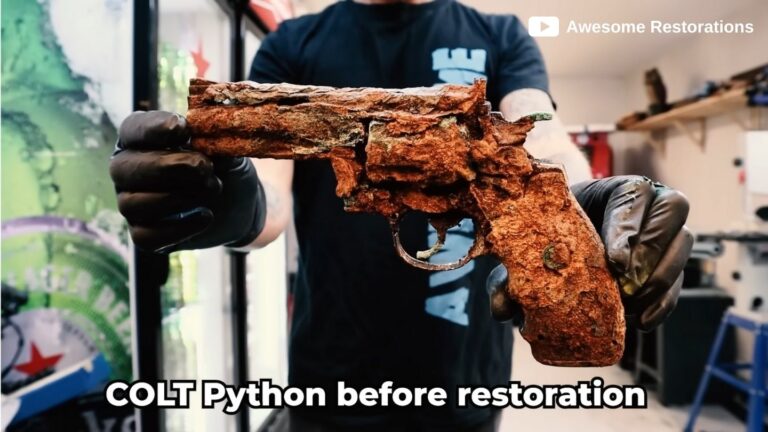

When you think of a Colt Python .357 Magnum, images of a classic, powerful revolver likely come to mind. However, what if this iconic firearm was actually a lighter?
One that has seen better days, buried under years of rust and corrosion? Here, we delve into the fascinating restoration journey of a Colt Python lighter, brought back to life by a skilled craftsman.
What Is the Colt Python Lighter?
Before diving into the restoration, it’s important to clarify: this is not a real firearm. The Colt Python lighter is a replica model based on the iconic revolver, designed as a budget-friendly butane lighter. Originally a novelty item, it’s a detailed reproduction that pays homage to the Colt Python’s sleek design.
This particular lighter was sent to the restorer by a subscriber, who unearthed it while magnet fishing in a lake. Completely encrusted in rust and dirt, it appeared beyond saving at first glance. However, what followed was a meticulous and rewarding restoration process.

Step 1: Tackling the Corrosion
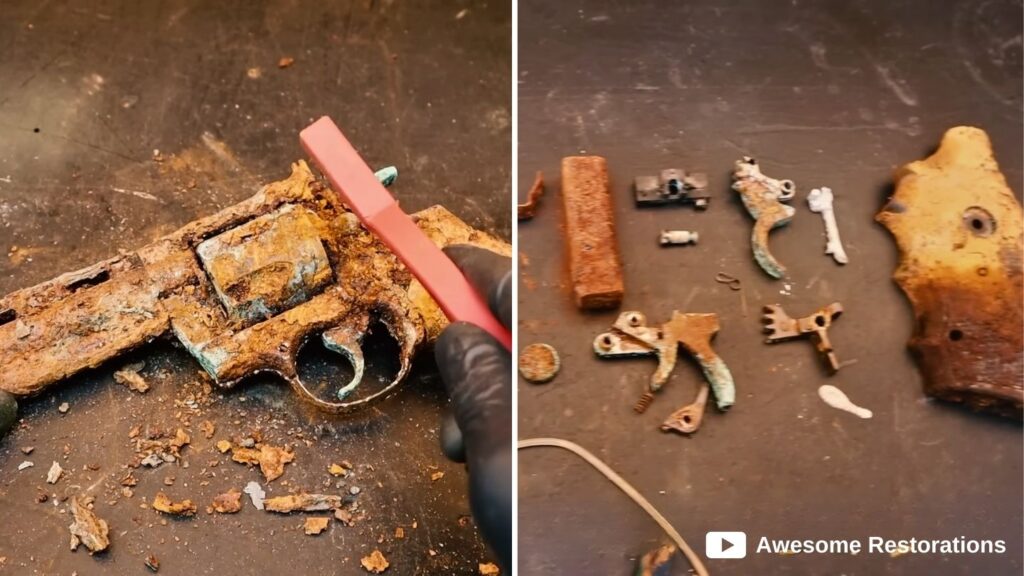
The restoration began with removing layers of mud, grime, and rust that had overtaken the lighter. The process involved:
- Brushing off loose debris with care.
- Applying oil to loosen stubborn screws and rusted parts.
- Drilling out four screws that had corroded too much to be salvaged.
The initial cleaning revealed the extent of the damage. Many parts were heavily pitted, requiring careful attention to preserve the lighter’s structural integrity.
Step 2: Sandblasting the Frame
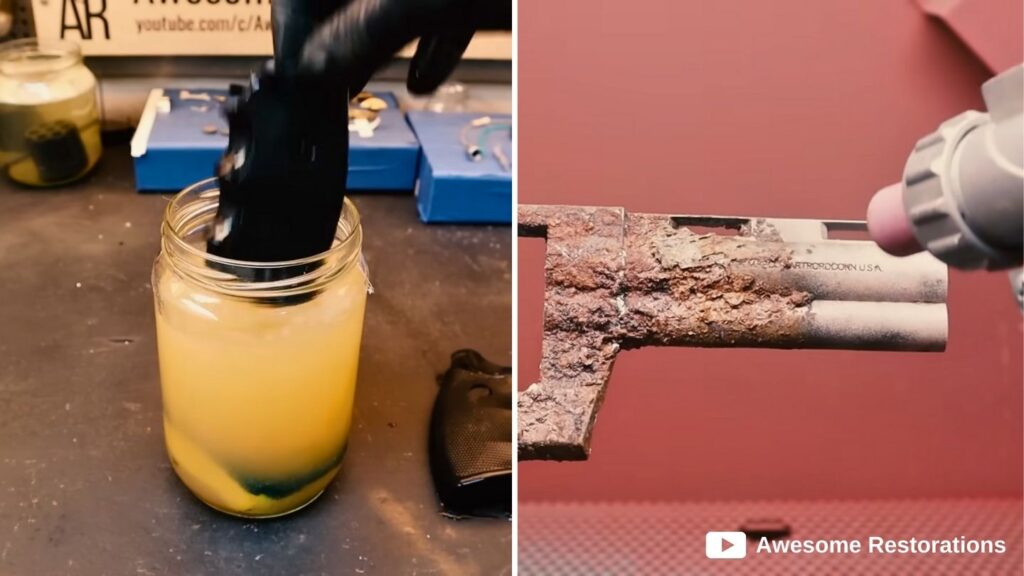
The main frame underwent sandblasting to strip away rust and expose the original metal. This step was vital to restore the lighter’s shape and eliminate deep corrosion.
Despite significant pitting in the metal, the frame emerged with a cleaner, smoother surface.
Step 3: Polishing the Metal
After sandblasting, a high-quality polish was applied to the metal components. This step not only restored the shine but also highlighted the craftsmanship of the original replica.
The transformation was already beginning to take shape, as the dull and rusted frame gave way to a gleaming metallic finish.
Step 4: Cleaning the Small Parts
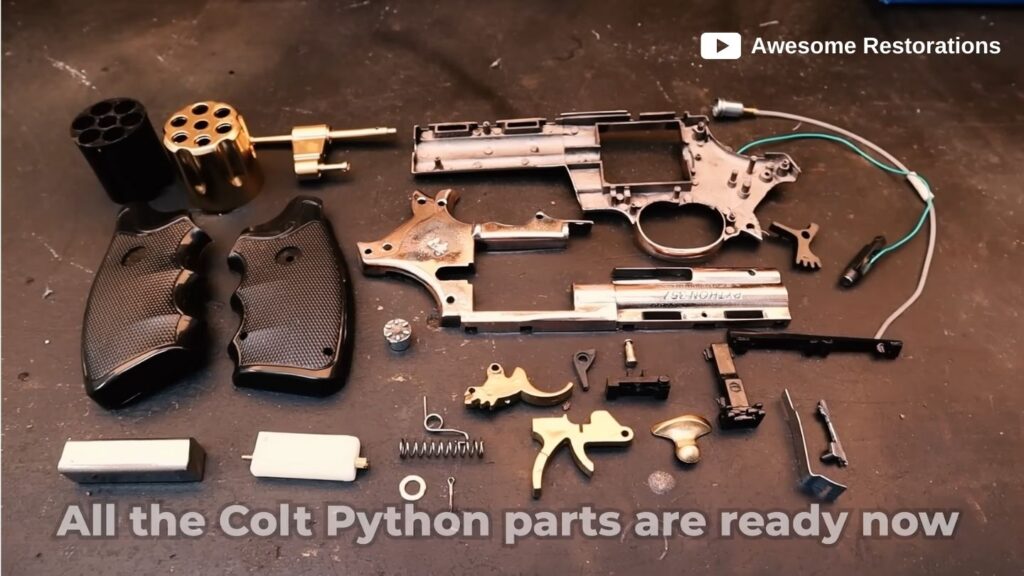
Every small component was meticulously cleaned. Tiny parts like springs, screws, and decorative elements were soaked and polished using muriatic acid and a mini cleaner.
Plastic components were treated with car polish, restoring their smooth, glossy appearance. These details played a crucial role in bringing the lighter back to life.

Step 5: Reassembly and Final Touches
With all parts cleaned, polished, and restored, the reassembly began. Each piece was carefully fitted into its place, ensuring the lighter not only looked stunning but also functioned flawlessly. The final touches included:
- Replacing broken butane valves and burners.
- Ensuring the lighter ignited and burned correctly.
The finished product was nothing short of breathtaking. The Colt Python lighter now sported a glossy metallic frame with gold and black accents, a remarkable transformation from its former rusted state.
Why This Restoration Matters
Restorations like this highlight the art of giving forgotten items a second chance. It’s a testament to patience, skill, and the belief that even the most hopeless objects can be revived.
For collectors and enthusiasts, such projects turn discarded pieces into cherished treasures.
Watch the Full Restoration Here
Witness the magic of Colt Python lighter restoration! Watch how this rusted replica evolved into a gleaming masterpiece in the video below. Don’t miss the full journey!
Related
Grass to Paradise Unreal Garden Transformation
Restoration of an Abandoned Subaru WRX: Bringing a Barn Find Back to Life
0 Comments